Biography
Martín Tironi es Profesor Titular y exdirector de la Escuela de Diseño en la Pontificia Universidad Católica de Chile. Además, es director del Núcleo Milenio Futures of Artificial Intelligence Research (FAIR). Tironi es sociólogo (Pontificia Universidad Católica de Chile, 2006), Magíster en Sociología (Sorbona V, 2010) y Doctor en Sociología por el Centre de Sociologie de l’Innovation, École des Mines de Paris (2013), donde también realizó su postdoctorado (2014). En 2018, fue Profesor Visitante en el Centre for Invention and Social Process, Goldsmiths, University of London.

His research, creative practice, and teaching focus on two main areas: (1) the analysis of the impacts of digital designs and devices, with an emphasis on the use of artificial intelligence; and (2) the anthropology of design, focused on non-anthropocentric perspectives and oriented toward planetary sustainability. He teaches at both undergraduate and graduate levels and supervises theses at undergraduate and doctoral levels.
Profesor Titular y exdirector de la Escuela de Diseño en la Pontificia Universidad Católica de Chile. Además, es director del Núcleo Milenio Futures of Artificial Intelligence Research (FAIR). Tironi es sociólogo (Pontificia Universidad Católica de Chile, 2006), Magíster en Sociología (Université Paris V–Sorbonne, 2010) y Doctor en Sociología por el Centre de Sociologie de l’Innovation, École des Mines de Paris (2013), donde también realizó su postdoctorado (2014). En 2018 fue Profesor Visitante en el Centre for Invention and Social Process, Goldsmiths, University of London.
Tironi ha sido investigador principal en varios proyectos Fondecyt, incluyendo Diseño de futuros en la era de la inteligencia artificial y la predicción algorítmica: problematizando la construcción de futuros tecnológicos en el contexto chileno (Nº 1210006, 2021–2023); Dataficación de entornos urbanos e individuos: un análisis de los diseños, prácticas y discursos de la producción y gestión de datos digitales en Chile (2021–2023); y Configurando espacios y usuarios inteligentes: estudio socio-técnico de las prácticas, dispositivos y discursos de las “Smart Cities” en Chile (Nº 11140042, 2015–2018). Actualmente dirige el proyecto Fondecyt (2025–2028) Digital Technologies for Climate Change: Exploring the Designs, Uses, and Effects of Digital Technologies for the Ecological Transition in Chile.
Es coeditor del libro Design for More-Than-Human Futures: Towards Post-Anthropocentric Worlding (Routledge, 2023). En el ámbito de la investigación-creación, formó parte del equipo curatorial que obtuvo la medalla de oro en la Bienal de Diseño de Londres (2021) con el pabellón Tectonic Resonance: From User-Centered Design to Planet-Oriented Design. Asimismo, es co-creador, junto a Manuela Garretón, de la instalación Ecologías Híbridas: Visualizando la huella terrestre de la inteligencia artificial, presentada en el Centro Cultural La Moneda (Chile), exhibida posteriormente como instalación en la Bienal de Arquitectura de Venecia 2025 y de Bajo Nuestros Pies: Las Tierras Raras de la IA (Museo Chileno de Arte Precolombino). También es autor de la instalación Devastaciones Generativas (Galería Lo Contador).
Tironi es miembro del International Advisory Board de la serie Dis-positions: Troubling Methods and Theory in STS (Bristol University Press) y forma parte de los comités editoriales de Revista 180 (UDP) y Revista Diseña (UC).
Frequent collaborators
This section brings together frequent collaborators who actively participate in the projects, research, and creative processes associated with initiatives led by Martin Tironi.

Manuela Garretón
Diseñadora y doctora en Ingeniería por la Pontificia Universidad Católica de Chile y magíster en Interactive Telecommunications Program (ITP) de la Universidad de Nueva York. Su investigación y práctica creativa se centran en el potencial de la visualización de datos para involucrarse críticamente con problemáticas sociales, ecológicas y tecnológicas contemporáneas.
Es investigadora adjunta en el Núcleo Milenio FAIR (Futuros de la Inteligencia Artificial) e investigadora asociada en el UCLAB University of Applied Sciences Potsdam, Alemania. Actualmente, su trabajo investiga cómo las representaciones visuales pueden revelar las dimensiones materiales, políticas y ambientales —a menudo pasadas por alto— de los sistemas digitales. Su práctica abarca una variedad de formatos, desde el periodismo de datos hasta las instalaciones interactivas. Es co-creadora, junto a Martín Tironi, de la instalación Ecologías Híbridas: Visualizando la huella terrestre de la inteligencia artificial, presentada en el Centro Cultural La Moneda (Chile), exhibida posteriormente como instalación en la Bienal de Arquitectura de Venecia 2025 y de Bajo Nuestros Pies: Las Tierras Raras de la IA (Museo Chileno de Arte Precolombino).

Pablo Hermansen
Diseñador y Doctor en Arquitectura y Estudios Urbanos. Ejerce la docencia y la investigación en la Escuela de Diseño de la Pontificia Universidad Católica de Chile. Desde 2003 lleva la Cátedra de Diseño de Interacción. Como profesor guía de titulación impulsa investigaciones desde el prototipado como dispositivo político-crítico. Como docente de postgrado desarrolla la reflexión-acción posthumanista sobre las consecuencias en la pólis y en la política de la actual crisis de coexistencia interespecies.
Desarrolla la investigación cualitativa, particularmente la etnografía con medios visuales, la indagación mediante el prototipado y la reflexión mediante dispositivos críticos. Desde la pregunta por las condiciones materiales para una coexistencia más-que-humana, sus principales ámbitos de investigación son (1) Prototipado interespecies, (2) Estrategias performativas de visibilización política en el espacio público y (3) Servicios públicos como espacio público. Profesionalmente, ejerce como director creativo y consultor (1) de proyectos de museografía digital e instalaciones interactivas y (2) de diseño de servicios, procesos organizacionales y gestión del cambio, especialmente en el sector público.
En julio de 2021, junto a Carola Ureta, Marcos Chilet y Martín Tironi, diseñaron el Pabellón de Chile para la London Design Biennale. La propuesta museográfica de este pabellón ganó la distinción máxima, es decir el mayor reconocimiento de este certamen, el más importante de la disciplina a nivel mundial.

Diego Rivera
He holds a degree in Psychology from the University of Chile and an MSc in Digital Society from the University of Edinburgh, and is currently pursuing a PhD in Social Sciences at the University of Chile. His research focuses on digital labor, processes of subjectivation on the internet, and the governmental rationalities associated with these processes.

Matías Valderrama
Sociologist. Master’s in Sociology (UC) and in Social Science Research (University of Warwick). PhD from the Centre for Interdisciplinary Methodologies (Warwick), funded by ESRC. He has participated in Fondecyt projects and research with the NGO Derechos Digitales on the social impacts of digital technologies in Chile.

Camila Albornoz
Social anthropologist and Master’s in Urban Development from UC. Her research focuses on new materialisms, science and technology studies, and sustainability transitions. She has worked as a research assistant in Fondecyt projects and as an adjunct lecturer in “Critical Design” at UC Design.
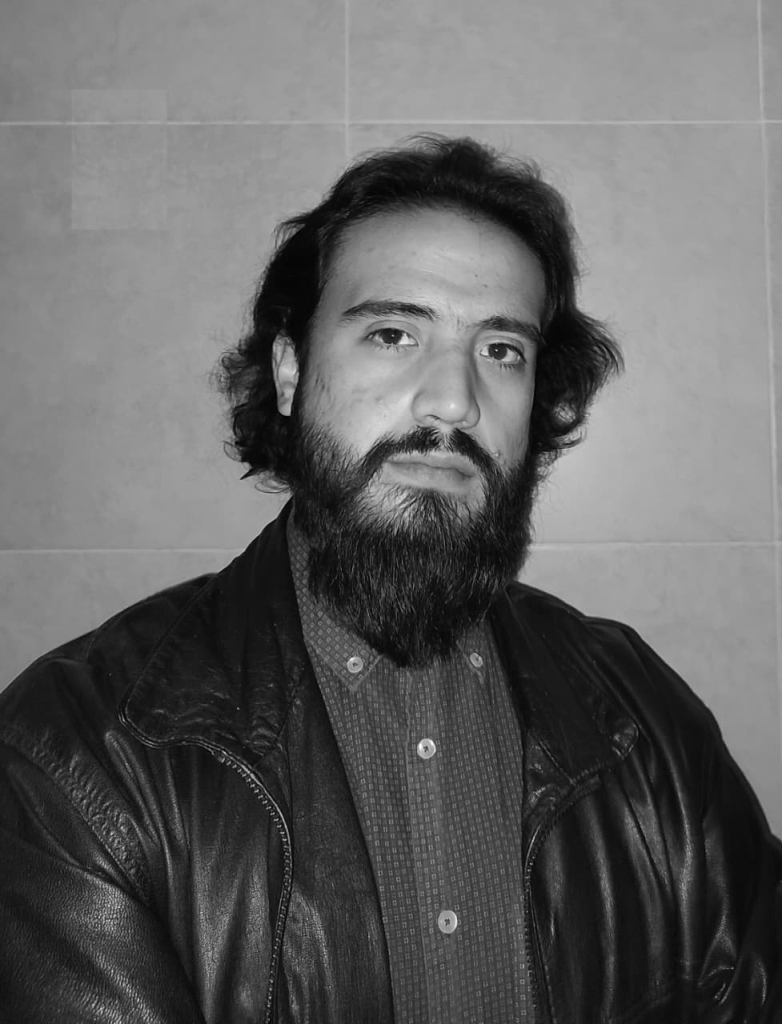
Jaime Ulloa
Antropólogo social y filósofo por la Universidad de Manchester. Sus líneas de investigación van en torno a la relación entre personas y tecnología en distintos contextos, tanto científicos como artísticos. Actualmente centrado en el estudio de la Inteligencia Artificial.